
How Custom Low Profile, Vibration-Proof Magnetics Help Optimize Avionics and Unmanned Aerial Systems.

PDF Version
Introduction
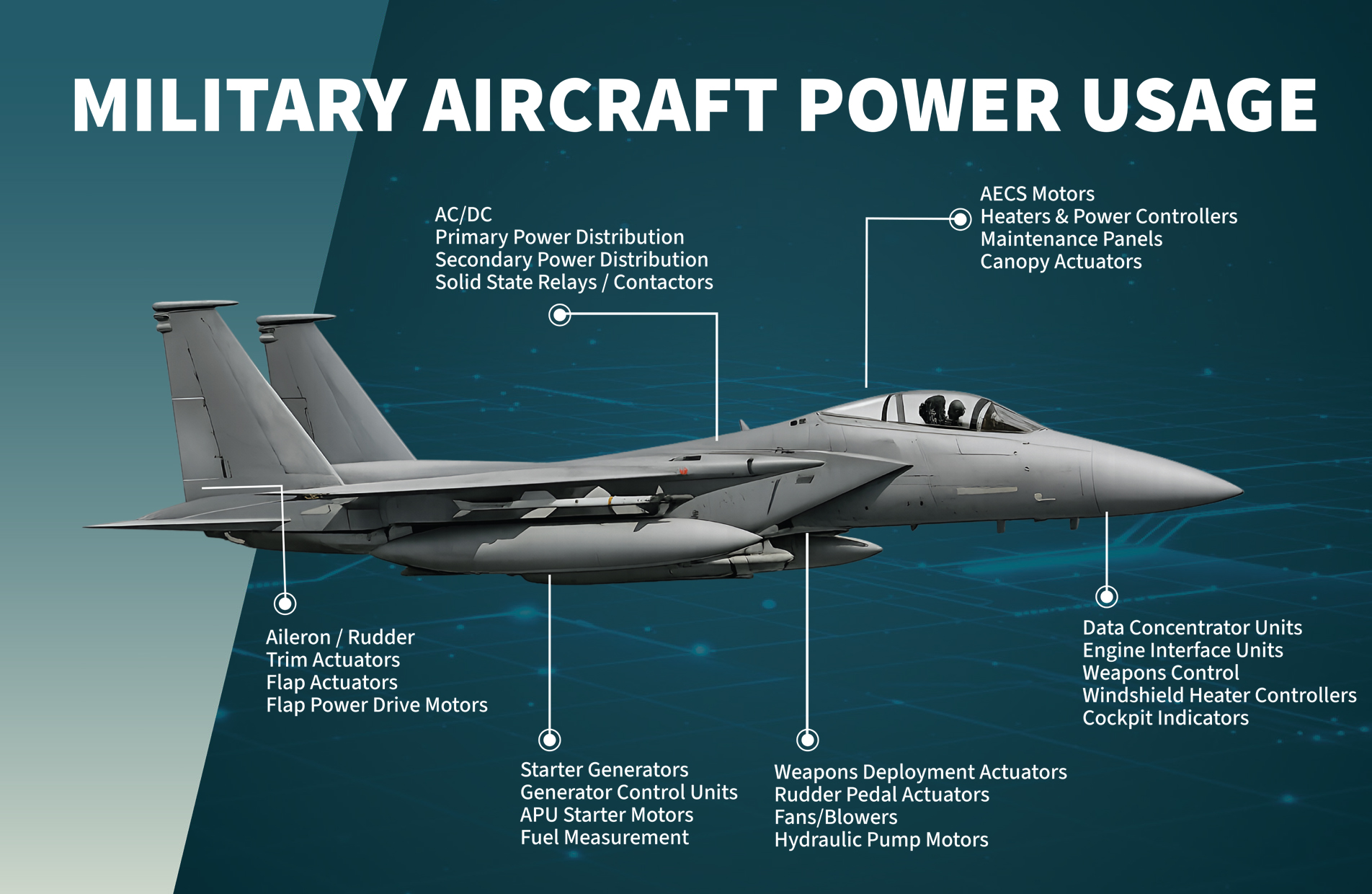
The rapid evolution of military aircraft, unmanned aerial vehicles (UAVs), loitering munitions, hypersonic platforms, and advanced avionics is driving unprecedented demand for higher airborne power density. Designers are under constant pressure to reduce Size, Weight, Power, and Cost (SWaP-C) while simultaneously improving reliability in harsh operating environments.
Traditional wire-wound magnetics often become a limiting factor in modern airborne power architectures due to their size, weight, thermal constraints, and susceptibility to mechanical stresses. Custom planar transformer technology offers a compelling alternative by delivering high power density, low-profile packaging, improved thermal performance, and exceptional resistance to shock and vibration.
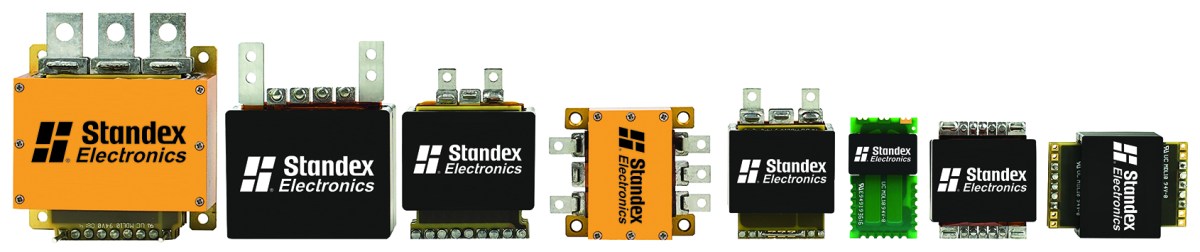
Standex Edge custom planar transformers are engineered specifically for mission-critical aerospace and defense applications, providing compact, high-efficiency power conversion solutions that meet stringent military and aerospace requirements. These solutions support applications ranging from avionics and flight controls to UAV power systems, radar electronics, satellite payloads, and next-generation defense platforms.
The Airborne Power Density Challenge
Modern airborne platforms are becoming increasingly electrified. Examples include:
- Advanced flight control systems
- AESA radar systems
- Electronic warfare systems
- Secure communications
- Autonomous navigation systems
- Sensor fusion platforms
- Directed energy technologies
- UAV propulsion and control electronics
Each subsystem demands more power while occupying less space than previous generations.
For military aircraft and drones, every gram matters. Designers must continuously improve:
- Power density (W/cm³)
- Weight reduction
- Thermal management
- Reliability
- Electromagnetic compatibility
- Environmental survivability
The challenge becomes even greater when electronics must operate in environments characterized by:
- Continuous vibration
- Long mission durations
- Mechanical shock
- Rapid temperature cycling
- High altitude operation
- EMI/EMC exposure
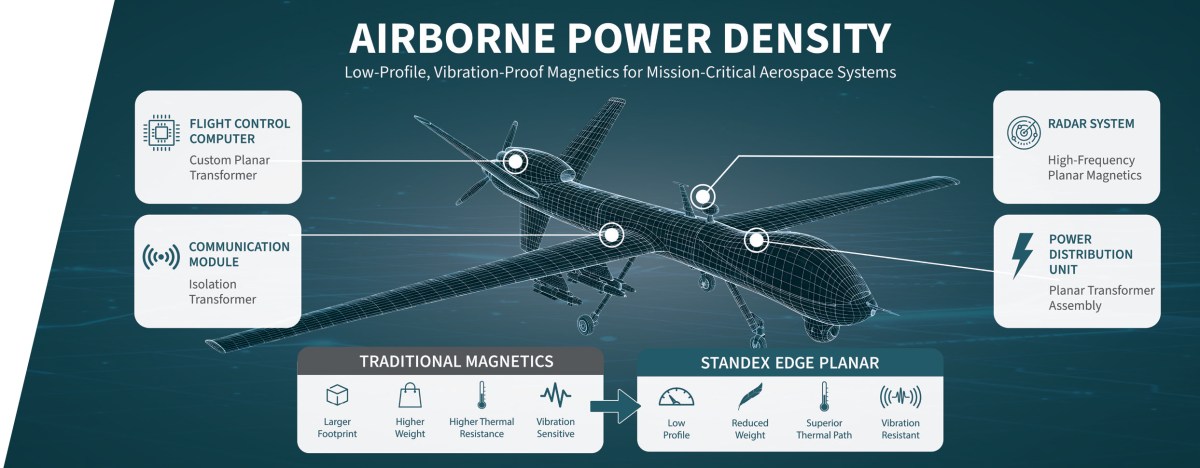
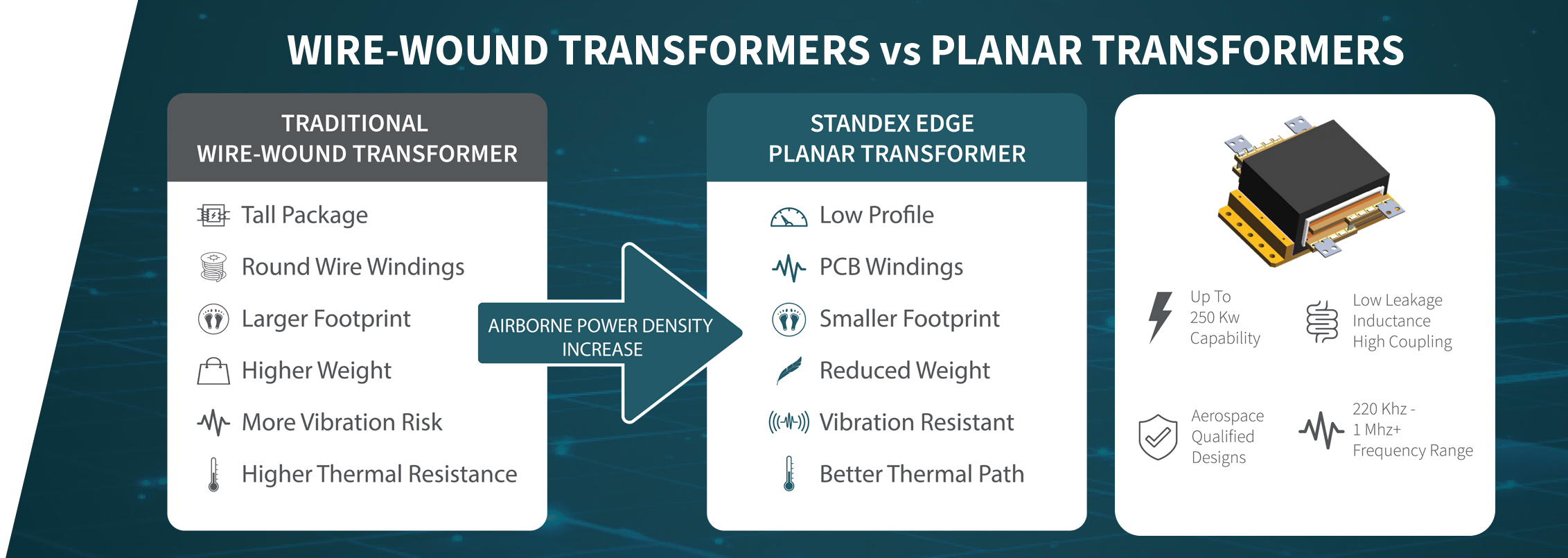
Conventional magnetics frequently struggle to meet these requirements without increasing system size or weight. The graphic below illustrates a few of the systems in which Planar Magnetics are the superior option to traditional magnetics and the specific characteristics in which they excel.
Why Magnetics Matter
Power conversion systems are the backbone of airborne electronics. Every avionics subsystem relies on magnetic components to:
- Step voltages up or down
- Provide galvanic isolation
- Manage transient conditions
- Filter noise
- Regulate power flow
Historically, these functions have been performed using wire-wound transformers and inductors. While effective, traditional magnetic designs introduce several challenges:

As defense and aerospace systems continue to shrink, these limitations become increasingly significant.
The Rise of Planar Transformer Technology
Planar transformer technology replaces conventional round-wire windings with precisely etched copper conductors embedded within multilayer PCB structures.
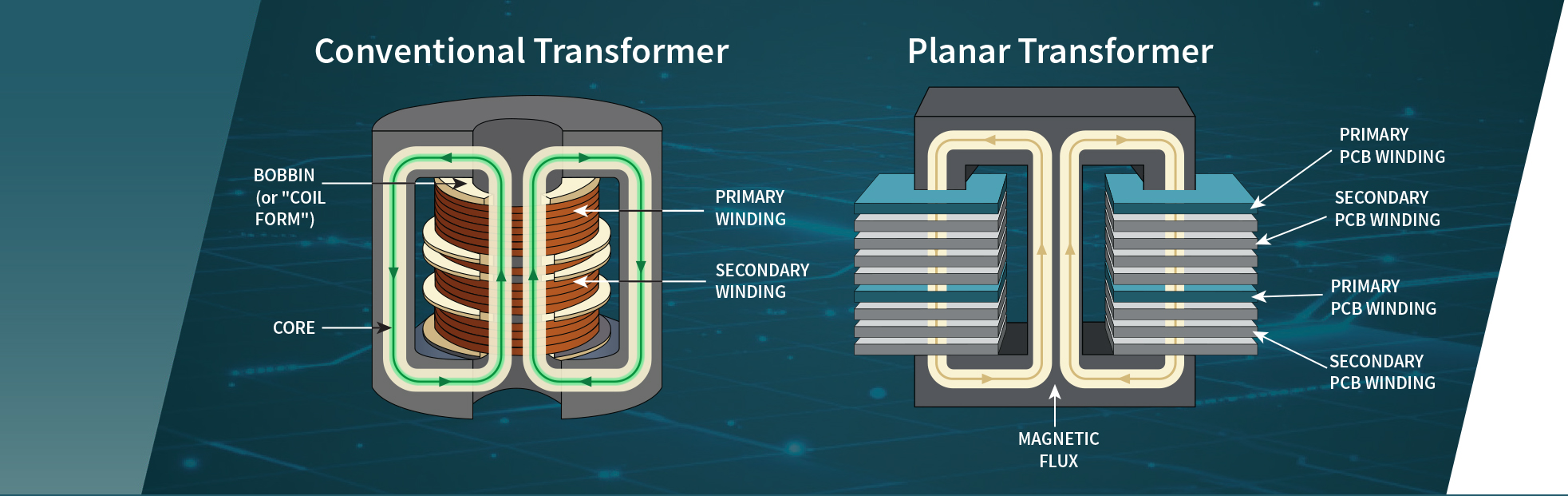
The result is a magnetic component that is inherently:
- Lower profile
- More mechanically stable
- Better thermally managed
- Highly repeatable
- Easier to integrate into compact power architectures
Standex Edge planar transformers are available across power ranges from approximately 25 W to 250 kW and frequencies extending beyond 1 MHz, enabling deployment across a broad range of aerospace and defense systems.
Advantages for Defense and Aerospace Systems
1. Low Profile Design
Airborne electronics increasingly utilize stacked PCB architectures and densely packed enclosures. Planar Transformers feature:
- Flat package geometries
- Low aspect ratios
- Reduced overall height
- Enhanced packaging flexibility
This enables designers to maximize volumetric efficiency without sacrificing electrical performance.
Compared to traditional wire-wound magnetics, planar solutions significantly reduce occupied board space while supporting high-power operation.
2. Superior Vibration Resistance
Aircraft, helicopters, UAVs, missiles, and hypersonic platforms are continuously exposed to severe vibration profiles. Traditional wound magnetics may experience:
- Wire movement
- Insulation wear
- Mechanical fatigue
- Long-term reliability degradation
Planar Transformer construction inherently minimizes these risks because conductors are fixed within rigid PCB layers. Benefits include:
- Increased mechanical robustness
- Reduced winding movement
- Improved fatigue resistance
- Greater long-term reliability
Standex Edge further enhances durability through encapsulation, impregnation, casting, moulding, and vacuum potting techniques developed specifically for military environments.
3. Enhanced Thermal Management
Heat is one of the primary reliability challenges in airborne electronics. Planar transformer technology provides superior thermal performance because heat is distributed across large copper surfaces and transferred efficiently into surrounding substrates and heatsinks. Advantages include:
- Lower hotspot temperatures
- Improved thermal spreading
- Increased power density
- Higher conversion efficiency
- Extended component life
Standex Edge planar solutions utilize optimized thermal pathways that support high-power defense and aerospace applications.
4. Higher Efficiency
Power losses translate directly into additional cooling requirements, increased fuel consumption, reduced mission endurance, and lower system reliability. Planar transformer designs offer:
- Lower leakage inductance
- Reduced AC winding losses
- Strong magnetic coupling
- Optimized high-frequency performance
Some aerospace power architectures achieve efficiencies exceeding 99% when leveraging advanced planar magnetic solutions.
5. SWaP Optimization
Size, Weight, and Power (SWaP) remain critical design metrics for defense OEMs. Planar transformers support SWaP goals through:
- Weight reduction
- Reduced component volume
- Improved thermal efficiency
- Simplified mechanical integration
This makes them ideal for UAVs, satellite systems, missile electronics, military aircraft, and electronic warfare platforms. Standex Edge specifically identifies planar magnetics as SWaP-optimized solutions for defense and aerospace systems.
Applications in Modern Airborne Platforms
Avionics Power Supplies
Modern avionics require highly reliable isolated power conversion. Planar transformers support DC-DC converters, auxiliary power systems, navigation electronics, and cockpit systems. Their compact footprint allows integration into densely populated avionics assemblies.
Unmanned Aerial Systems (UAS)
Drone platforms require maximum endurance, reduced weight, and high reliability. Planar transformers contribute by minimizing power conversion losses while maintaining ruggedness under continuous vibration and varying environmental conditions. Standex identifies UAV electrical power and control systems among key application areas.
Radar and Electronic Warfare
Electronic warfare systems demand high-frequency operation, compact packaging, and excellent thermal performance. Planar magnetics help achieve these objectives while supporting mission-critical reliability requirements.
Missiles and Hypersonic Systems
Missile and hypersonic platforms experience: extreme acceleration, high vibration, and severe thermal stress. Planar transformer architectures provide a mechanically robust solution capable of maintaining performance under demanding operational conditions.
Space and Satellite Systems
Space-borne electronics require high reliability, minimal mass, and compact packaging. Standex Edge has developed custom aerospace solutions integrating planar transformers and inductors into unified assemblies, achieving substantial space savings compared to traditional magnetic implementations.
Qualification for Mission-Critical Environments
Defense and aerospace systems demand rigorous qualification testing. Standex Edge supports these requirements through compliance and testing capabilities including:
- MIL-STD-202
- MIL-STD-981
- MIL-PRF-27
- DO-160
- AS9100
- ITAR Registration
- Thermal shock testing
- Vibration testing
- Burn-in testing
- Humidity and environmental testing
These capabilities help ensure consistent performance in airborne and defense applications where failure is not an option.

Conclusion
As defense and aerospace platforms become increasingly electrified, achieving higher airborne power density is no longer optional—it is essential. Custom planar transformers provide a proven route toward:
- Reduced size and weight
- Improved thermal performance
- Superior vibration resistance
- Enhanced reliability
- Higher power density
- More effective missions
For avionics, UAVs, radar systems, missiles, and next-generation aerospace platforms, planar magnetics represent a transformative technology that aligns directly with modern SWaP objectives. Standex Edge custom planar transformers help defense and aerospace designers overcome the limitations of conventional magnetics, enabling compact, efficient, and mission-ready power conversion systems built for the most demanding environments.
Related Articles
-

Smart Grid Thermal Management
How Temperature Managing Magnetics Improve Efficiency, Reliability, and Power Density in Smart Grid Systems
-

Leading Edge Smart Grid Magnetics
Designing Power Magnetics Components to Meet Today’s Smart Grid Standards
-
Get the E-D-G-E
…in Custom Defense and Aerospace Magnetics Solutions.
-
Custom, Semi-Custom, or Standard?
Empowering System Designs with Optimal Magnetic Components.
-

Defense & Aerospace Planar Magnetics
How Planar Magnetics Enhance Performance in Advanced Defense and Aerospace Systems